Beyond Chatbots,Training LLMs with Reinforcement Learning using TorchRL
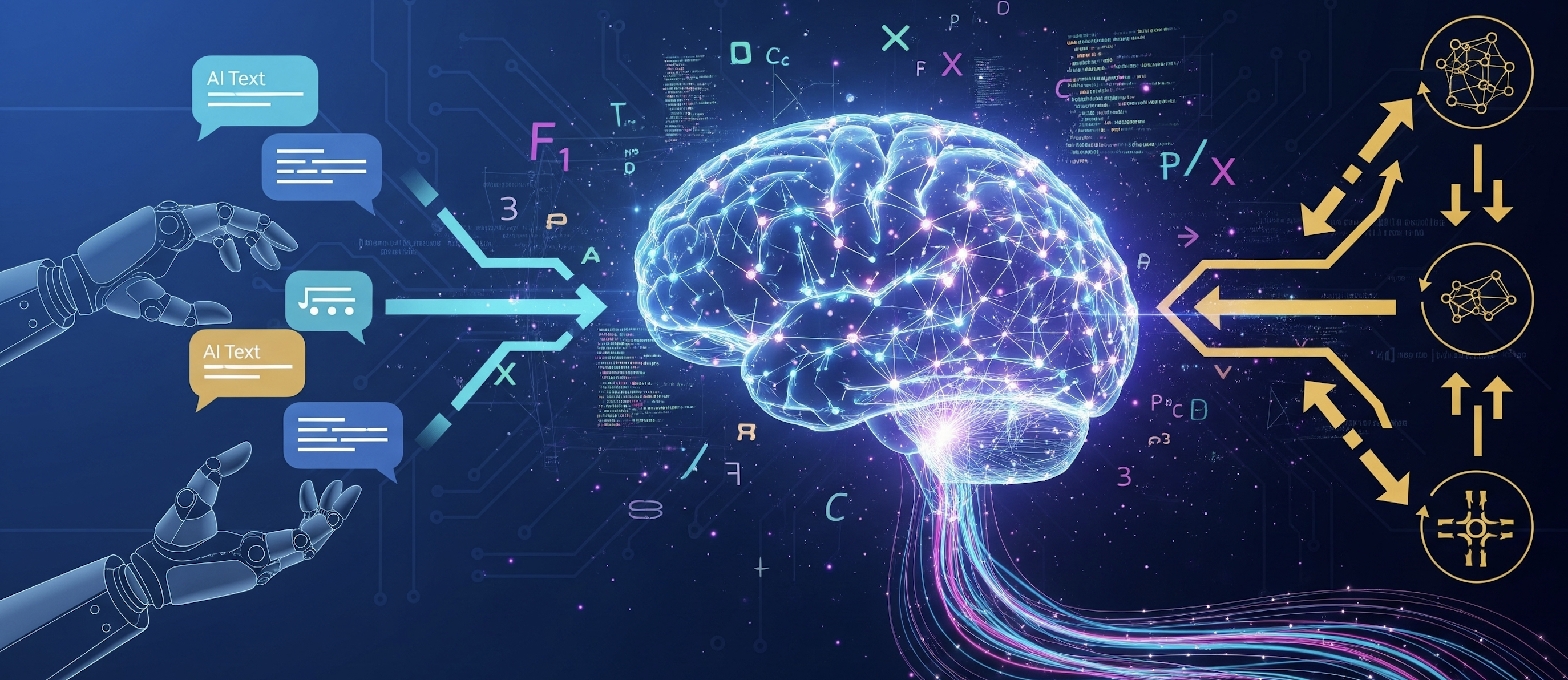
Beyond Chatbots: Training LLMs with Reinforcement Learning using TorchRL
Large Language Models (LLMs) have revolutionized how we interact with AI, from generating creative text to answering complex questions. Traditionally, LLMs are trained to predict the next word, a process that makes them excellent at generating coherent text. But what if we want them to act in an environment, make decisions, and learn from consequences, much like a robot learning to walk or an AI mastering a game?
This is where Reinforcement Learning (RL) comes in, and TorchRL provides a groundbreaking toolkit to bridge these two powerful paradigms.
The LLM as an RL Agent: A Conceptual Shift
At its core, Reinforcement Learning is about an agent learning to make optimal decisions by interacting with an environment. The agent observes a state, takes an action, receives a reward, and transitions to a new state. This fundamental loop, once confined to numerical observations and discrete actions, is now being reimagined for the world of language.
The conceptual shift is profound: we’re moving from treating an LLM as a mere text predictor to viewing it as an agent capable of perceiving, acting, and learning within dynamic, language-rich environments.
Overview of torchrl.envs.llm: The Toolkit for Language Agents
TorchRL’s torchrl.envs.llm module is the dedicated infrastructure that enables this transformation. It provides specialized components that map the LLM’s natural abilities onto the core RL framework, allowing us to train LLMs using powerful RL algorithms.
Let’s break down how this toolkit redefines the fundamental RL concepts for LLMs:
The State: From Numbers to Meaning
In classic RL, the state is typically a concrete, low-dimensional numerical vector or a pixel array. Think of a robot’s joint angles or the raw pixels of a game screen.
For an LLM agent, the state is fundamentally textual and semantic. It’s not just about the words, but the context, meaning, and intent conveyed by those words. This is inherently high-dimensional and complex.
- How TorchRL Helps:
ChatEnv: This specialized environment (as seen in the TorchRL documentation) structures conversational input, like user prompts and chat history, into aTensorDictthat the LLM can consume as its “observation.” It manages the turn-taking and context.BrowserTransform: This powerfulTransform(discussed in our exploration of TorchRL’s transforms) allows the LLM agent to “perceive” the internet. It takes the raw, complex data of a webpage (HTML, visible text) and injects it into theTensorDictas part of the observation, effectively converting visual and structural information into a textual state the LLM can “read.”
All this complex, multi-modal information is seamlessly carried by the TensorDict, TorchRL’s universal data structure, ensuring a clean and efficient flow.
The Action: From Buttons to Generation
Classic RL agents typically have a finite, well-defined action space: discrete choices like “move left,” “jump,” or continuous numerical values like “apply torque.”
For an LLM agent, the action is generative: it’s the act of constructing a sequence of text, token by token. This action space is effectively infinite in its possibilities. Furthermore, for advanced capabilities like tool use, the action can be a structured text command that another system interprets.
- How TorchRL Helps:
LLMModel(and similar policy wrappers): These components integrate the LLM’s text generation capabilities directly into the RL framework. They handle the tokenization of the generated text and ensure it’s correctly placed within theTensorDictas the “action” for the RL loop.BrowserTransform(and otherToolTransforms): These transforms are crucial for enabling tool use. They parse the LLM’s generated text. If the text matches a predefined tool call format (e.g., a JSON command for navigation), the transform executes that command in the external tool (like a browser) and then provides the tool’s output back to the LLM as part of the next observation. This allows the LLM to “act” beyond just generating conversational text.
The Reward: From Hardcoded to Learned
In classic RL, the reward is a clear, numerical signal directly from the environment, often hardcoded and objective (e.g., +1 for every timestep the pole is balanced).
For an LLM agent, the reward for its text generation is often subjective and implicit. How do you numerically score a “good” conversation, a “helpful” answer, or a “safe” response? This cannot be easily hardcoded. Therefore, the reward must be learned.
- How TorchRL Helps:
LossModules for RLHF (Reinforcement Learning from Human Feedback): TorchRL provides the infrastructure to build the entire RLHF pipeline. This involves training a separate Reward Model (which is itself annn.Modulewithin TorchRL). This Reward Model takes the LLM’s generated text and outputs a numerical score, which then becomes the “reward” signal that the RL algorithm (like PPO, as seen in TorchRL’sexamples/rlhf) uses to update the LLM’s weights. TheTensorDictseamlessly carries this reward from the Reward Model back to the loss function.
The Policy: From Tabula Rasa to Fine-Tuned Genius
A classic RL agent’s policy is typically a neural network that starts learning from a “blank slate” (random weights) and gradually builds its understanding.
An LLM agent’s policy is a massive, pre-trained Large Language Model. It already possesses an immense amount of knowledge about language, facts, and reasoning from its pre-training on vast text corpora. The RL process doesn’t teach it what words mean; it teaches it how to use its existing knowledge to achieve specific goals and align with human values.
- How TorchRL Helps:
- TorchRL provides the necessary wrappers and interfaces to integrate these large, pre-trained models into the RL training loop. This means you can take a model from Hugging Face Transformers, wrap it with TorchRL’s components, and then apply standard RL algorithms like PPO to fine-tune its behavior.
The Environment: From Fixed to Flexible and Dynamic
Classic RL agents operate in fixed simulations (e.g., a game, a physics simulator) with static rules.
For an LLM agent, the “environment” can be highly dynamic and open-ended. It could be a live conversation, the entire internet, or a complex system of tools.
- How TorchRL Helps:
- Composability with
Transforms: TorchRL’s powerfulTransformarchitecture is key. You can start with a basicChatEnvand thenappend_transformaBrowserTransform, aToolTransformfor a calculator, or aRewardTransformthat connects to a human feedback system. This allows you to build incredibly complex and dynamic environments by composing smaller, modular pieces. - The
SyncDataCollector(as seen in the “Get started with your own first training loop” tutorial) efficiently gathers data from these dynamic environments, and theReplayBuffer(detailed in the “Replay Buffer Tutorial”) stores it for efficient training, all powered byTensorDict.
- Composability with
The TorchRL LLM Agent: A Visual Summary
+---------------------------------------------------------------------------------+
|                 LLM as an RL Agent in TorchRL: The Data Flow                    |
+---------------------------------------------------------------------------------+
|                                                                                 |
|  This diagram illustrates how TorchRL's toolkit enables an LLM to function      |
|  within the Reinforcement Learning framework, emphasizing the role of           |
|  TensorDict as the universal data carrier.                                      |
|                                                                                 |
+---------------------------------------------------------------------------------+

                                 +---------------------+
                                 |  LLM (Policy/Actor) |
                                 |  (Generates Text)   |
                                 +----------+----------+
                                            |
                                            | Action (Text/Tool Call)
                                            |  (Contrast: Not a button press, but a generated string)
                                            v
+---------------------------------------------------------------------------------+
|  Environment (e.g., ChatEnv)                                                    |
|  - Provides textual context (State)                                             |
|  - Processes LLM's action                                                       |
|  (Contrast: State is text/conversation, not pixels/numbers)                     |
+---------------------------------------------------------------------------------+
                                            |
                                            | Observation (Text/Web Content)
                                            |  (Contrast: High-dimensional, semantic text)
                                            v
                                 +---------------------+
                                 |  Transforms         |
                                 |  (e.g., BrowserTransform, ToolTransform) |
                                 |  - Pre-processes observations           |
                                 |  - Executes tool calls (e.g., opens browser, runs code) |
                                 +----------+----------+
                                            |
                                            | Experience (TensorDict: State, Action, Next State, Done)
                                            |  (TensorDict is the universal data structure here)
                                            v
                                 +---------------------+
                                 |  Replay Buffer      |
                                 |  (Stores TensorDicts)|
                                 |  (Contrast: Optimized for TensorDicts, not tuples)
                                 +----------+----------+
                                            |
                                            | Sampled Batch (TensorDict)
                                            v
                                 +---------------------+
                                 |  RL Algorithm (PPO) |
                                 |  (Updates LLM's weights)|
                                 |  (Contrast: Optimizes LLM's text generation for reward)
                                 +----------+----------+
                                            ^
                                            | Reward (from Reward Model)
                                            |  (Contrast: Reward is learned/subjective, not hardcoded)
                                            |
                                 +---------------------+
                                 |  Reward Model       |
                                 |  (Evaluates Text,   |
                                 |   provides score)   |
                                 |  (Contrast: A separate, learned "judge" for text quality)
+---------------------+The Future is Conversational and Adaptive
TorchRL’s torchrl.envs.llm toolkit represents a pivotal step towards building truly intelligent, general-purpose AI agents. By providing the robust infrastructure to treat LLMs as first-class RL agents, it opens up new frontiers in AI research and application. We can now envision agents that not only understand and generate human language but also learn to navigate complex digital environments, use tools, and adapt their behavior based on feedback, moving us closer to AI that can truly interact with and learn from the world as we do. The journey from simple chatbots to sophisticated, adaptive language agents has just begun, and TorchRL is paving the way.